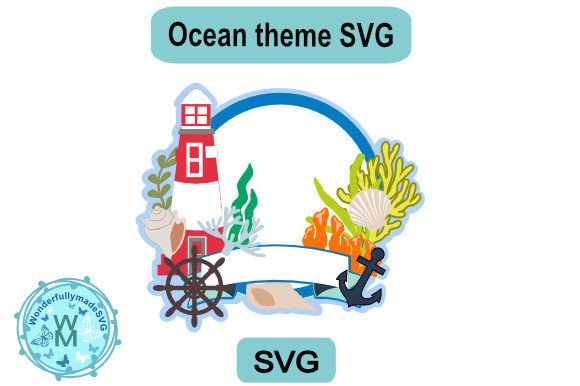
Ocean Sea Theme 3D SVG Shapes Review
First Impressions: Evaluating Visual Depth for Client Work
When reviewing the Ocean Sea Theme Shaker Topper Svg for a recent boutique bakery rebrand, my primary focus was not just on the aesthetic appeal but on the technical viability of the file for professional production. As a graphic designer managing visual identities for handmade businesses, I often encounter assets that look beautiful on screen but fail during the fabrication process. This specific asset immediately stood out because it bridges the gap between flat digital illustration and tangible product design. The ocean theme is saturated with current market trends, yet the execution of the shapes suggests a thoughtful approach to layering that is essential for shaker-style projects.
The mood this asset creates is undeniably playful yet polished, striking a balance that is difficult to achieve in the crowded creative marketplace. It avoids the generic clipart look by offering distinct separation between layers, which is critical when translating a 3D SVG concept into physical cardstock. For my client, who specializes in high-end custom cakes and dessert tables, this level of detail signals quality. It feels like a premium graphic design asset rather than a disposable novelty, making it suitable for brands that want to maintain a sense of craftsmanship while leveraging modern crafting technology.
Translating Digital Layers to Physical Brand Touchpoints
In the context of a real-world project, versatility is key. I tested this Ocean Sea Theme Shaker Topper Svg across multiple brand touchpoints to see if it could carry the visual identity beyond just the cake itself. Shaker toppers are a new trend in the cake topper and cake baking world, but as designers, we must ask if they can serve dual purposes in marketing visuals and packaging design. During my assessment, I found that the individual elements within this SVG design work exceptionally well when deconstructed for social media graphics and Etsy product listings.
For example, the wave and marine life shapes served as excellent decorative accents for Instagram stories promoting the client’s summer menu. Because the lines are clean and the hierarchy is clear, these elements remained legible even when scaled down for mobile viewing. This adaptability makes it a valuable addition to any design bundle intended for small business branding. Furthermore, when used in its intended 3D format, the topper acted as a hero graphic for photography. The depth created by the assembled layers added necessary texture to flat-lay photos, enhancing the overall perceived value of the client's offerings without requiring expensive prop styling.
Optimal Placement Versus Design Constraints
Understanding where an asset performs best is just as important as knowing its limitations. This ocean-themed collection excels in large layout areas and themed collections where the intricate details can breathe. It is ideal for Cricut projects involving 65lb to 80lb cardstock, where the structural integrity of the shapes supports the shaker mechanism. In terms of digital application, it shines as a focal point in Canva templates for event invitations or as a textured background element in web design for beach-themed vendors.
However, professional judgment requires caution in specific scenarios. I would advise against using this asset in minimalist corporate branding or highly technical editorial designs where visual noise distracts from data. The whimsical nature of the shapes clashes with sterile, grid-heavy layouts. Additionally, while the SVG is optimized for cutting, designers should be careful when resizing elements below two inches. At very small scales, the internal cut lines required for the shaker effect may become too fragile for standard cutting machines, leading to material waste. Similarly, on complex photographic backgrounds, the asset can lose its definition unless a solid backing or drop shadow is applied to establish contrast and maintain visual trust.
Technical Validation and Commercial Readiness Checklist
Before integrating the Ocean Sea Theme Shaker Topper Svg into a commercial deliverable, I ran through a rigorous technical validation process. A pretty file is useless if it causes production delays. Here are the practical checks every designer and maker should perform:
- Vector Node Inspection: Open the file in Illustrator or Inkscape to ensure nodes are smooth and paths are closed. Jagged vectors result in frayed cardstock edges.
- Contrast Testing: Preview the design in grayscale. If the ocean elements blend together without color, the silhouette needs adjustment for low-contrast applications like embossing or single-color sublimation design.
- Typography Pairing: Test the asset against various font styles. I found it pairs beautifully with modern sans-serif fonts for a fresh look, but clashes with overly ornate script fonts that compete with the detailed shapes.
- Mockup Verification: Always place the design on a realistic product mockup before finalizing client presentations. This reveals scale issues that aren't apparent in the vector workspace.
- Licensing Confirmation: Verify the commercial license specifically covers both physical end products and digital marketing use. This is non-negotiable for protecting your client's business interests.
These steps ensure that the transition from digital file to physical product is seamless, maintaining the professionalism expected in paid design work.
Enhancing Emotional Connection Through Tactile Design
Ultimately, the decision to use this asset came down to emotional resonance. In the current landscape of print-on-demand and digital saturation, tactile experiences drive engagement. The Ocean Sea Theme Shaker Topper Svg offers a unique opportunity to bring movement and interactivity to static branding. When a customer picks up a cake topper that has dimension and movable parts, the interaction creates a memory anchor that flat stickers or printed tags simply cannot replicate.
For my client, this translated directly to increased user-generated content. Customers were more likely to photograph and share the interactive toppers, providing free organic marketing. From a design strategy perspective, this validates the investment in high-quality 3D SVG assets. They are not merely decorations; they are functional tools for audience engagement. Whether you are creating printable wall art, designing merchandise, or building a cohesive brand identity for a seasonal campaign, this asset provides the structural and aesthetic foundation needed to elevate a project from amateur to professional. It respects the intelligence of the maker and the expectations of the end consumer, proving that niche crafting assets have a legitimate place in serious commercial design workflows.