Multilayer Postcard 02: Friendship Cut Review
First Impressions of the Layered Aesthetic
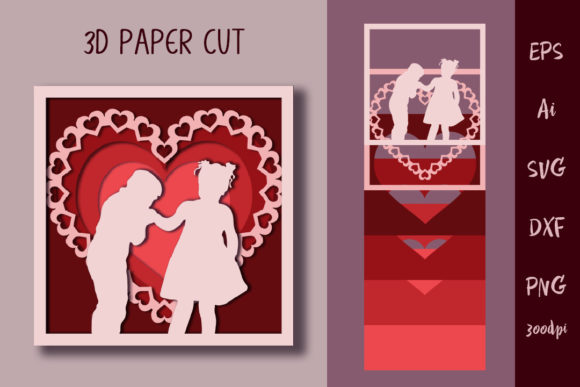
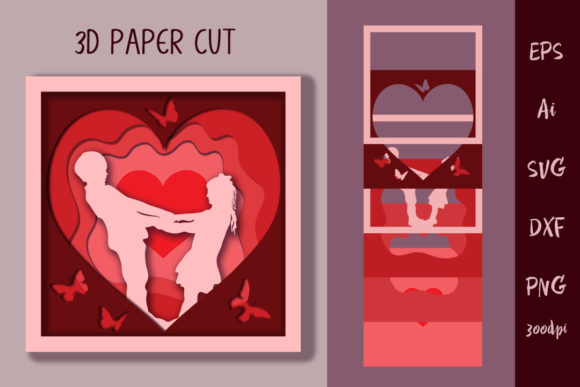
When I first opened the files for Multilayer Postcard 02. Friendship. Cut, my immediate thought was about dimension. As an embroidery designer who frequently bridges the gap between digital cutting files and needlework, I look for assets that translate well across mediums. This design is categorized as a 3D SVG intended for shadow boxes and paper crafts, but its potential for mixed-media embroidery projects is significant. The visual personality here is soft yet structured, evoking a sense of nostalgia and warmth that fits perfectly with the "Friendship" theme. It does not feel like a generic clip-art bundle; rather, it possesses a deliberate architectural quality typical of layered paper art.
The mood is distinctly celebratory but versatile. While the description highlights Valentine’s Day and birthdays, the layout suggests it could easily serve as a year-round token of appreciation. For a maker or Etsy seller, this versatility is crucial. You are not buying a single-use holiday asset; you are acquiring a design foundation that can be adapted for various emotional touchpoints. The layers are distinct, which is the most critical factor when considering how this will interact with fabric, stabilizer, and thread.
Translating Paper Layers to Stitched Texture
In a real-world studio scenario, I recently tested the concept behind Multilayer Postcard 02. Friendship. Cut for a custom embroidered tote bag project intended as a bridesmaid gift. The challenge with any layered design is ensuring that the physical buildup of thread does not distort the final image. Because this file originates from the shadow box category, the separation of elements is clean. This makes it an excellent candidate for an applique design adaptation or a multi-step satin stitch project where each layer represents a different fabric or thread color.
For the tote bag, I treated the digital layers as guides for fabric placement. Instead of stitching out dense fill areas for every section, I used the cut lines to create raw-edge appliqué pieces held down with a running stitch. The result was a textured, tactile postcard effect on canvas that felt far more premium than a standard flat embroidery file. Customers respond to this kind of depth. When selling handmade products, especially in the personalized gift market, the difference between a flat graphic and a dimensional, layered creation often justifies a higher price point. It signals that the item was crafted with intention, not just automated.
Ideal Applications for Creative Entrepreneurs
Beyond tote bags, this design structure performs exceptionally well in several commercial embroidery niches. If you are running a craft business or managing an Etsy shop, consider these practical applications:
- Sweatshirt Embroidery: The friendship theme works beautifully on crewneck sweatshirts. Use the layers to mix fleece colors, creating a vintage collegiate look that is currently trending.
- Nursery Decor: Adapted as a wall hanging or pillow cover, the soft edges and layered aesthetic fit the gentle requirements of baby embroidery without being overly infantile.
- Holiday Greeting Cards: Combine the 3D SVG cut function with machine embroidery to create hybrid greeting cards. Stitch the sentiment and outline, then insert the laser-cut paper layers for a true shadow box effect.
- Embroidered Patches: The distinct borders make this suitable for patch creation, provided the text size remains legible at smaller scales.
For digital product sellers, this file also serves as high-value design assets for printable mockups. Showing customers how the layers interact helps them visualize the finished product, increasing buyer engagement and trust.
Navigating Fabric Limitations and Hoop Constraints
While Multilayer Postcard 02. Friendship. Cut is versatile, it requires careful handling depending on your substrate. Because the design relies on the interaction of multiple layers, fabric texture plays a massive role in the final outcome. On smooth cotton or linen, the layers will sit crisply. However, on highly textured fabrics like terry cloth or chunky knits, the subtle separation between layers may get lost visually. In these cases, I recommend increasing the spacing between elements or using a heavier stabilizer to prevent the fabric grain from swallowing the design details.
Stretchy fabrics present another challenge. If you are attempting this on jersey knit or performance wear, the registration between layers must be perfect. Any shifting during the stitching process will ruin the 3D illusion. Always use a cut-away stabilizer and consider a temporary spray adhesive to keep the fabric taut. For small hoop sizes, verify that the intricate corners of the postcard shape do not exceed your stitching field. Nothing disrupts workflow faster than realizing a design element clips the hoop edge mid-stitch.
Be particularly cautious with dark fabrics. Layered designs often rely on shadow and light contrast to create depth. On black or navy material, internal shadows may disappear unless you intentionally stitch a highlight border or use lighter thread colors to define the separation between layers. Always test on scrap fabric first to ensure the visual hierarchy remains intact.
Professional Notes on Execution and Value
To maximize the professional quality of your finished product, treat Multilayer Postcard 02. Friendship. Cut with the same rigor as a complex machine embroidery design. Before committing to a client project or listing a new item in your small shop, run through this practical checklist:
- Verify Licensing: Confirm whether the license allows for commercial use of finished items or if it is restricted to personal crafting. This is non-negotiable for Etsy sellers and apparel decorators.
- Check Stitch Density: If converting the SVG to an embroidery file manually, avoid excessive density where layers overlap. Too much thread causes puckering and needle breaks.
- Thread Color Contrast: Test your palette in both natural and artificial light. What looks distinct on screen may blend together on fabric.
- Mockup Testing: Create black and white mockups to check value contrast. If the design reads well in grayscale, it will have strong visual appeal in color.
- Stabilizer Selection: Match your stabilizer weight to the number of layers. More layers equal more weight; adjust accordingly to maintain fabric drape.
Ultimately, the value of this design lies in its ability to elevate simple projects into memorable keepsakes. Whether you are creating a personalized gift for a friend or developing a new line of holiday embroidery for your boutique, Multilayer Postcard 02. Friendship. Cut offers a sophisticated foundation. It respects the intelligence of the maker while providing enough structural guidance to ensure a polished result. By understanding its origins in shadow box art and adapting those principles to textile work, you can produce items that stand out in a crowded marketplace. Remember that technical precision supports creative expression; when the layers align perfectly, the emotion of the friendship theme shines through clearly, resulting in a product that customers are proud to give and receive.